What helps at home
for dogs and cats.
The honest version. Brushing is the ideal — and almost nobody keeps it up, ours included. We won’t pretend to know the one perfect product or the perfect technique; it’s always changing, there’s a lot of hype, and much of it comes down to what your pet will actually tolerate. What we can do is tell you what’s reasonable, what we sell and when it’s worth electing, and where to save your effort.
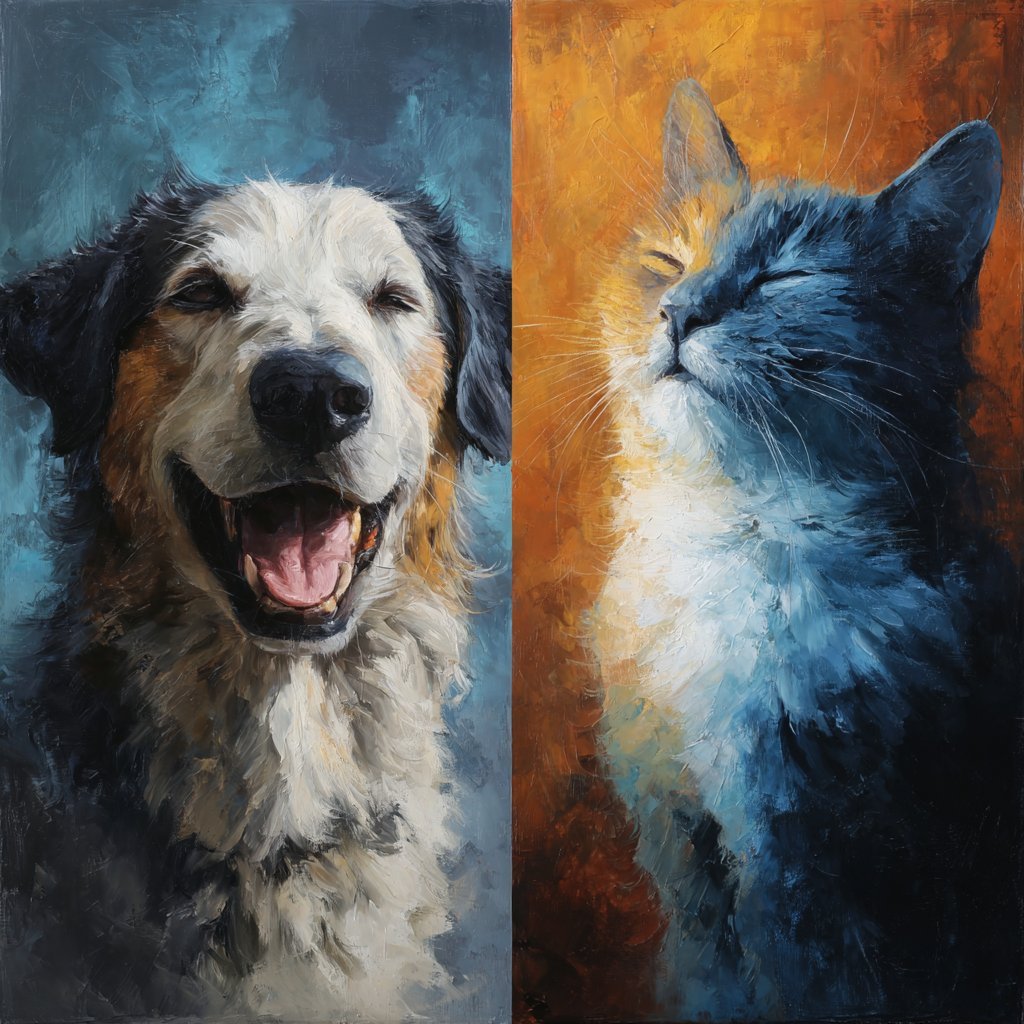
Brushing is the ideal. If you can swing it.
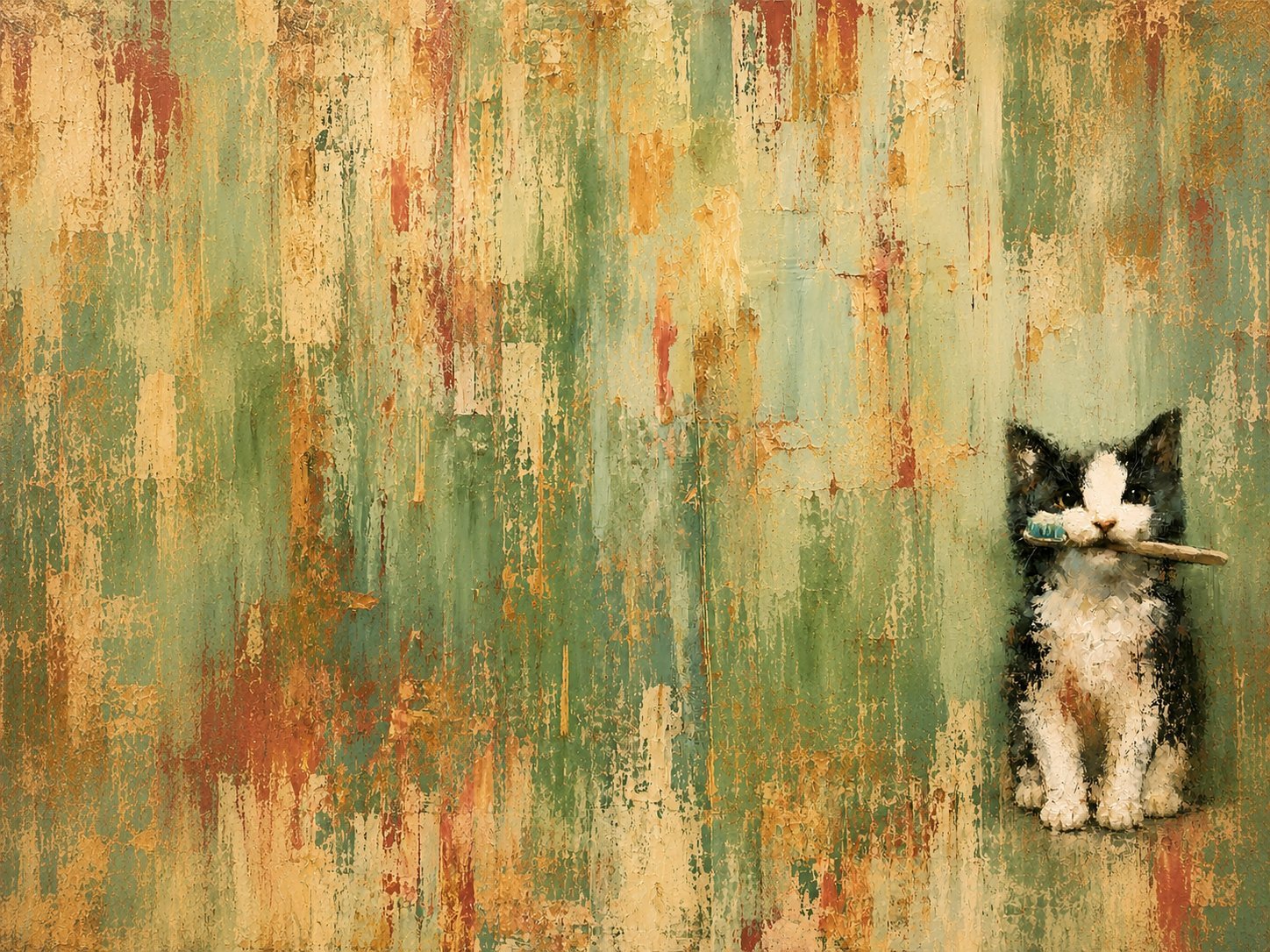
Most of us can’t, honestly.
Brushing slows dental disease. It buys time between cleanings and lowers risk — that part is real. Daily is the ideal; even a few times a week makes a measurable difference. The catch usually isn’t your pet so much as the calendar — keeping any habit going is hard, and only a small share of us manage it for long.
So start slow and keep it kind. Let your pet taste the toothpaste first, build up to touching the gumline, and remember that consistency beats perfection — a few seconds beats zero. If it turns into a nightly wrestling match, that’s your answer, and there’s no shame in it. Plenty of the rest of this page is written for exactly that pet.
Pet toothpaste only.Human paste isn’t made to be swallowed, and xylitol — in some human products — is toxic to dogs. A pet enzymatic paste is made for the job, and most pets decide it tastes like a treat.
Ideals, and what’s actually practical.
There are ideals, and there’s real life with a real animal. A lot of what helps between cleanings comes down to trial and error — what your pet tolerates, what fits your routine, what you’ll actually keep up. We’ll point you toward what’s reasonable and stay honest about what we don’t know. Anyone promising certainty here is selling something.
When you’re standing in the aisle, the Veterinary Oral Health Council seal is the one thing worth looking for. It means a product was independently tested and cut plaque or tartar by at least 20% — most products on the shelf never were. It isn’t a promise of a clean mouth; it’s a promise that someone actually measured. That’s the most useful filter we can hand you.
A good chew helps a little as your pet gnaws, and it’s genuinely trial and error which ones they’ll take to. One thing we won’t hedge on: skip the hard stuff. Bones, antlers, hooves, and hard nylon fracture more teeth than they ever prevent — we repair the results. If you can’t dent it with a fingernail, it’s too hard. And a “dental treat” without the VOHC seal is marketing, not medicine.
Prescription dental diets like Hill’s t/d are built so the tooth sinks into the kibble instead of shattering it, wiping the surface as it goes. They help with buildup above the gumline — as one part of a routine, not the whole plan. Worth asking about if it suits your pet.
The appeal is obvious — they ride along with water your pet already drinks. Here’s where we’ll just be plain with you: the evidence is mixed, formulas change constantly, and with little FDA oversight, nobody can fully vouch for what’s in every bottle.
Healthy Mouth is one that’s stood the test of time and stays relatively free of harsh chemicals, so we’ll offer it as a reasonable example — not a guarantee. We can’t promise your pet will drink it, and a newer formula may honestly be the better one by the time you read this. Treat these as an easy extra, never a cornerstone.
We’ll say this one straight, because it matters. Scraping tartar off a wide-awake pet makes the mouth look better and treats none of the disease that lives below the gumline. It can’t take radiographs, and it leaves a false sense of security — a tidy-looking mouth quietly getting worse. It’s a cosmetic service wearing a medical name.
What we sell — and when it’s worth it.
This is the part actually worth reading. Not because we’re hoping to sell you things — we mostly aren’t — but because knowing when something is worth electing, and when it isn’t, is the real education. Here’s the plain version on each.
What it is. A gel of hyaluronic acid — a substance your pet’s own gum tissue is partly made of. Placed on the surgical site, it holds moisture, calms inflammation, and gives healing cells a scaffold to work on.
What the research shows. In a controlled trial of the very same 0.8% gel added to periodontal surgery, treated sites filled in about 5.7 mm of bone versus 4.5 mm where it was left out — plus a little more attachment gained (5.1 vs 4.0 mm) and less gum recession. Small, real, and repeatable.
The honest part. Your pet’s body does the vast majority of the work — the gel adds roughly a millimeter on top. And a millimeter is genuinely worth having (why, just below). At $90 on a surgery that’s already happening, it’s an easy yes.
What it is. A liquid barrier sealant we paint into the gumline groove right after a cleaning. It dries in seconds and forms a film that keeps plaque bacteria from settling below the gumline, while still letting water and oxygen through. Nothing to do at home.
What the research shows. It’s VOHC Accepted — it cleared the same independent bar as everything else carrying that seal — and a single professional application lasts up to six months.
The honest part. It slows disease down; it doesn’t prevent it. The right call when brushing isn’t going to happen and you want to buy some real time between visits. If you do brush, you probably don’t need it.
What it is. A small scaffold of medical-grade gelatin, cross-linked into a porous sponge and placed into a site where disease has eaten away bone. It gives your pet’s own bone and tissue a framework to grow back into, then dissolves on its own.
What the research shows. In a controlled split-mouth study in dogs, treated sites gained about twice the pocket-depth improvement — roughly 2 mm versus 1 mm — and about 1.5 mm of new bone height on the cheek side versus 0.7 mm without it, with no adverse effects. Real, but incremental.
The honest part. Even in the right advanced case, it improves the odds of saving a tooth by a little. It’s never make-or-break, and we’ll only raise it when the case genuinely calls for it.
What it is. A waxy barrier sealant we apply along the gumline in clinic. It sets into a thin film that makes it harder for plaque and tartar to re-form — about two weeks of protection per application.
The honest part. Two weeks isn’t long, but it covers the stretch that matters most: after extractions, when the mouth is too sore for brushing and home care hasn’t started yet. It bridges that gap, and applications can be repeated when we want to keep the barrier going.
Pockets and bone loss almost always head one direction — deeper — and bone doesn’t grow back on its own once it’s gone. That’s what makes the small numbers matter. A 4 mm pocket is one we can still clean; a 6 mm pocket sits closer to the root tip and into surgical territory. Bone tells the same story — many roots are only about 10 mm long, so 7 mm of support versus 5 mm is the difference between a tooth we watch and one the guidelines say to remove. Once support drops past about half, discomfort tends to follow and extraction becomes the kinder call. So a millimeter saved now isn’t nothing — it can be the whole margin that keeps a tooth cleanable, comfortable, and yours.
If we don’t think something will help your pet, we’ll tell you — and we won’t put it on your invoice. Prices are shown as add-ons to a procedure; the full menu lives on Services & Pricing.
We won’t sell you certainty. We’ll help you find what works.
No product reaches below the gumline, and none of this replaces a real cleaning — that’s the part that happens while your pet is asleep, where we can actually see and treat what’s there. Everything else simply buys time between visits.
So we won’t hand you a “perfect” regimen and a bag of the best-of-everything. We’ll tell you what’s reasonable, what we’d choose for our own pets, and what to skip — then help you find the version your pet will actually tolerate. That’s the whole job, and we’re glad to do it with you.
Not sure what’s worth it for your pet?
Bring it up at the exam. We’ll sort out what’s realistic for your pet and your life — no upsell, no judgment, just a plan you’ll actually keep.